

Starting a company is an exciting milestone, but managing the financial logistics often feels overwhelming. When revenue starts flowing in and expenses begin piling up, you need a centralized place to manage your money. Relying on your personal checking account is a fast track to accounting headaches and potential legal trouble.
Establishing a separate financial hub for your company is a foundational step for any serious entrepreneur. A dedicated account keeps your bookkeeping organized, protects your personal assets, and builds credibility with your customers and vendors. It also makes tax season significantly less stressful, allowing you to clearly categorize every deductible expense.
Learning how to open a business bank account does not have to be a complicated process. By understanding the specific requirements for your business structure and knowing what features to look for, you can set your finances up for long-term growth. This guide will walk you through the types of accounts available, the documents you must gather, and the exact steps to finalize your application.
Why Your Business Needs a Dedicated Account
Many new entrepreneurs make the mistake of funneling their early revenue directly into their personal checking accounts. While this might seem convenient initially, it creates massive complications as the company grows. Opening a dedicated account offers several critical advantages that protect both you and your company.
Personal Liability Protection
When you form a Limited Liability Company (LLC) or a corporation, the law views your business as a separate legal entity. This separation is what protects your personal assets—like your home or personal savings—from business debts and lawsuits. However, if you mix personal and business funds, a court can rule that your business is not truly a separate entity. This concept is known as “piercing the corporate veil.” Maintaining separate finances is the best way to preserve this vital legal protection.
Simplified Tax Preparation
Come tax season, the IRS requires you to accurately report your business income and expenses. If you use a single account for everything, you will spend hours trying to remember if a specific charge from eight months ago was a personal lunch or a client meeting. A dedicated account provides a clean, clear record of all business transactions. This level of organization saves you time, reduces the risk of audit penalties, and often lowers your accountant’s billing hours.
Professionalism and Credibility
Perception matters when you are building a brand. When clients pay for your services, they expect to write a check or submit a payment to a company name, not an individual. Having a business account allows you to process payments under your official business name. This builds trust with your customers and signals to vendors that you are operating a legitimate, professional enterprise.
Establishing Business Credit
Eventually, your company may need a loan or a line of credit to purchase inventory, upgrade equipment, or expand operations. Lenders look closely at your financial history to determine your creditworthiness. A dedicated business bank account helps establish this financial history. Some business accounts even come with a corporate credit card, giving you a straightforward way to build a strong business credit score.
Selecting the Right Type of Business Bank Account
Just as you have different personal accounts for different financial goals, your company requires specific accounts to handle various financial tasks. Depending on your operational needs, you may want to open one or a combination of the following options.
Business Checking Accounts
A business checking account is the core engine of your company’s finances. You will use this account for day-to-day operations, such as depositing customer payments, paying vendors, purchasing supplies, and running payroll. When comparing checking accounts, look closely at transaction limits, monthly maintenance fees, and the availability of debit cards for authorized employees.
Business Savings Accounts
A savings account gives you a secure place to park excess capital while earning interest. Many smart business owners use these accounts to set aside money for quarterly estimated taxes, unexpected emergencies, or future equipment upgrades. Because you will not use this account for daily expenses, you can take advantage of higher Annual Percentage Yields (APY). Keep in mind that some savings accounts limit the number of withdrawals you can make each month.
Merchant Services Accounts
If you plan to accept credit and debit card payments from your customers, you will likely need a merchant services account. This account acts as an intermediary between your customer’s bank and your business checking account. When a customer pays with a card, the funds process through the merchant account before settling into your primary checking account. Pay close attention to processing fees, transaction costs, and daily settlement charges when selecting a merchant services provider.
Essential Documentation and Identification Requirements
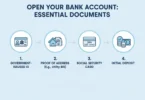
Banks are strictly regulated and must verify the identity of both the business and its owners before opening an account. The business bank account requirements vary slightly depending on your legal entity type. However, almost all financial institutions will require a valid, government-issued photo ID for anyone authorized to sign on the account.
Requirements for Sole Proprietorships
A sole proprietorship is the simplest business structure. Because the business and the owner are considered the same legal entity, the documentation requirements are relatively light.
- Social Security Number (SSN) or an Employer Identification Number (EIN).
- A Doing Business As (DBA) certificate or a fictitious name certificate, if you operate under a name other than your own legal name.
- A basic business license, depending on your local city or county regulations.
Requirements for Limited Liability Companies (LLCs)
LLCs offer personal liability protection, which means the bank requires formal proof that the entity legally exists within your state.
- An Employer Identification Number (EIN) issued by the IRS.
- Articles of Organization, stamped and approved by your state’s filing office.
- An Operating Agreement. Even if your state does not legally require an Operating Agreement, many banks request it to identify the authorized managers and members of the company.
- Relevant local business licenses or industry-specific permits.
Requirements for Corporations
Corporations are complex legal entities with strict regulatory requirements. Banks require extensive documentation to ensure the individuals opening the account have the authority to do so.
- An Employer Identification Number (EIN).
- Articles of Incorporation, filed and approved by the state.
- Corporate Bylaws, which outline how the corporation is governed.
- A corporate resolution signed by the board of directors. This document specifically authorizes the opening of the bank account and lists the designated signers.
Step-by-Step Guide to the Application Process
Once you know what type of account you need and have your paperwork organized, the actual application process is highly straightforward. Following a logical progression will ensure you do not encounter any frustrating delays.
Step 1: Research and Compare Banks
Do not simply default to the bank that holds your personal checking account. Take the time to shop around. Evaluate traditional brick-and-mortar institutions, credit unions, and modern financial technology companies. Compare their monthly maintenance fees, incoming and outgoing wire fees, minimum balance requirements, and digital tools.
Step 2: Gather Your Required Documents
Collect all the necessary entity formation documents, your EIN confirmation letter from the IRS, and your personal identification. If your business has multiple partners or owners, coordinate with them to ensure everyone has their identification ready. If you are applying in person, bring physical copies of everything. If you are applying online, scan your documents into clear, legible PDF files.
Step 3: Submit Your Application
You can generally apply online or schedule an appointment at a local branch. During the application, you will provide your business address, industry type, and estimated annual revenue. The bank will use this information to verify your identity and ensure your business complies with federal regulations.
Step 4: Fund the Account
Most banks require an initial deposit to activate your new account. This minimum opening deposit can range from a few dollars to over a thousand dollars, depending on the institution. You can usually fund the new account by writing a check from your personal account, initiating an electronic transfer, or depositing cash at a branch.
Step 5: Activate Digital Features
Once the bank approves your application and processes your deposit, set up your online portal. Download the bank’s mobile application, order your physical debit cards, and request a batch of paper checks if your vendors require them.
Online vs. In-Person Banking: Pros and Cons
The banking landscape has shifted dramatically over the last decade. Business owners now face a fundamental choice between digital-first platforms and traditional, branch-based banking.
The Appeal of Online Business Banking
Online business banking platforms are built for efficiency. These financial technology companies partner with insured banks to provide seamless digital experiences. Because they do not have the massive overhead costs of operating physical branches, they typically pass those savings on to the customer.
- Pros: They frequently offer fee-free accounts, no minimum balance requirements, and higher interest rates. They also boast superior digital interfaces that integrate smoothly with modern accounting software and payroll systems. The application process is usually fast, allowing you to open an account from your home office in minutes.
- Cons: Online banks generally lack physical branches, making cash deposits difficult or reliant on third-party ATM networks. Furthermore, you will not have a dedicated, face-to-face relationship with a local branch manager.
The Enduring Value of Traditional Banks
Traditional banking institutions have served communities for decades and offer a comprehensive suite of financial products under one roof.
- Pros: If your business handles a large volume of physical cash, a traditional bank is essential. You can walk into a branch, deposit cash securely, and speak directly with a teller. Furthermore, building a personal relationship with a local banker can be incredibly valuable when you need to negotiate a complex commercial loan or secure a large line of credit.
- Cons: Traditional banks are notorious for charging monthly maintenance fees, transaction limits, and high costs for wire transfers. Their digital tools and software integrations are also frequently slower and clunkier than their online-only competitors.
Common Mistakes to Avoid When Opening an Account
Even experienced entrepreneurs can stumble when setting up their financial infrastructure. Avoiding these common pitfalls will save you money and protect your company’s financial health.
First, do not ignore the fee schedule. Many banks advertise “free” business checking, but bury strict requirements in the fine print. You might face a $15 monthly fee if your daily balance drops below $2,000, or you might incur charges if you deposit more than 100 checks in a single billing cycle. Read the terms and conditions carefully to ensure the fee structure aligns with your actual business volume.
Second, avoid delaying the process. Open your account the moment you receive your EIN and formation documents. If you wait until you secure your first massive client, you might face an awkward situation where you have a check made out to your business, but no legal place to deposit it.
Finally, do not overlook software integration capabilities. Your bank account must communicate with your bookkeeping software. If your chosen bank does not sync reliably with popular platforms like QuickBooks, Xero, or FreshBooks, your accountant will have to enter transactions manually, costing you significant time and money.
Managing Your New Business Account for Success
Opening the account is just the beginning of your financial journey. Proper management ensures your cash flow remains healthy and your records stay pristine.
Start by connecting your new bank feed directly to your accounting software. This automation ensures every transaction imports seamlessly, making monthly reconciliations incredibly fast. Assign clear categories to your expenses on a weekly basis so you are never scrambling at the end of the year to organize your deductions.
Establish strict internal controls to prevent fraud. Set up automated text or email alerts for large withdrawals, international transactions, or balance drops. If you have employees with company debit cards, enforce strict spending limits and require receipts for every purchase. Regularly review your monthly statements to catch any unauthorized charges immediately.
Securing Your Financial Foundation
Treating your business finances with the same respect and care as your personal finances is a vital component of entrepreneurial success. By separating your funds, choosing the right institutional partner, and maintaining diligent records, you protect your legal standing and prepare your company for sustainable scaling.
Take the time to assess your cash flow needs, evaluate the differences between online and traditional banks, and gather your paperwork. A properly structured business bank account empowers you to focus less on administrative headaches and more on delivering exceptional value to your customers.