
Securing your financial future starts with a single, foundational step. You need a safe place to store your money, receive your paychecks, and manage your daily expenses. Opening a bank account provides that security, offering a reliable framework to build your financial life.
Navigating the modern banking landscape might seem overwhelming at first glance. You have thousands of institutions to choose from, ranging from massive international banks to localized credit unions and innovative online-only platforms. Each option promises different benefits, interest rates, and digital tools. Finding the right fit requires understanding your own financial habits and goals.
By breaking the process down into manageable steps, you can confidently select the right institution and account type for your needs. This guide will walk you through the entire process. You will learn how to compare different accounts, gather the necessary documentation, and successfully complete your application.
Types of Bank Accounts
Before you fill out any applications, you need to understand the different types of bank accounts available. Most financial institutions offer a variety of options designed to serve specific purposes.
Checking accounts
A checking account is your financial command center. Designed for everyday transactions, this account allows you to deposit your paycheck, pay bills, and make regular purchases using a debit card. Because checking accounts are built for frequent use, they typically do not limit the number of transactions you can make in a month. However, they usually offer little to no interest on your balance.
Traditional savings accounts
If you want to set money aside for short-term goals or emergencies, a traditional savings account is a great option. These accounts pay a modest amount of interest on your deposited funds. Banks often limit the number of free withdrawals or transfers you can make from a savings account each month, encouraging you to leave the money untouched so it can grow over time.
High-yield savings accounts
High-yield savings accounts operate similarly to traditional savings accounts, but they offer significantly higher interest rates. Online banks frequently provide these accounts because they have lower overhead costs than brick-and-mortar institutions. If you want to maximize the growth of your emergency fund or save for a large purchase, a high-yield account can help your money work harder for you.
Documentation Requirements
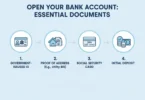
Banks must verify your identity to comply with federal regulations and prevent fraud. Gathering your documents ahead of time will make the application process incredibly smooth. Here is a checklist of what you generally need to open an account.
Valid government-issued identification
You must prove who you are. Bring an unexpired, government-issued photo ID. The most common acceptable forms of identification include a state-issued driver’s license, a state ID card, or a U.S. passport.
Social Security Number or ITIN
Financial institutions require your Social Security Number (SSN) for tax reporting purposes and to verify your identity. If you do not have an SSN, many banks will accept an Individual Taxpayer Identification Number (ITIN). Some institutions also allow non-citizens to open accounts using a passport from their country of origin alongside an alien identification card.
Proof of address
Banks need to know where you live. Your driver’s license often serves as proof of address, provided the address is current. If you recently moved or your ID does not match your current residence, you will need a secondary document. A recent utility bill, a signed lease agreement, or an official government document showing your name and current address will usually suffice.
Initial deposit
Many banks require a minimum initial deposit to activate your new account. This amount can range from $0 to $100 or more, depending on the institution and the specific account type. Check the bank’s requirements beforehand so you can have the funds ready via cash, check, or electronic transfer.
Digital vs. Traditional Banking
Choosing where to bank is just as important as choosing the account itself. You generally have two main paths: traditional brick-and-mortar banks or digital, online-only banks.
Traditional brick-and-mortar banks
Traditional banks offer physical branch locations where you can speak with tellers and financial advisors face-to-face. This is highly beneficial if you frequently deposit cash, need access to a safe deposit box, or prefer resolving complex financial issues in person. Credit unions fall into this category as well, often providing community-focused services and lower fees. The downside is that traditional banks typically offer lower interest rates on savings accounts and may charge higher monthly maintenance fees.
Online-only banks
Digital banks operate entirely on the internet, without any physical branches. Because they save money on real estate and in-person staffing, they pass those savings on to their customers. Online banks typically offer higher annual percentage yields (APYs) on savings products and charge fewer fees than traditional banks. The main drawback is the lack of in-person support and the potential difficulty of depositing physical cash.
The Application Process
Once you have chosen your bank, selected an account type, and gathered your documents, you are ready to apply. You can usually complete this process online or in person.
Applying online
Opening an account online is fast and convenient. You can complete the process from your living room in about ten to fifteen minutes.
- Navigate to the bank’s official website and select the account you wish to open.
- Fill out the application form with your personal details, including your name, date of birth, address, and SSN.
- Upload clear photos of your government-issued ID and any required proof of address documents.
- Agree to the bank’s terms and conditions.
- Fund the account by transferring money from an existing bank account using a routing and account number.
Applying in person
If you prefer a guided experience, you can open an account at a local branch.
- Schedule an appointment or walk into a local branch during business hours.
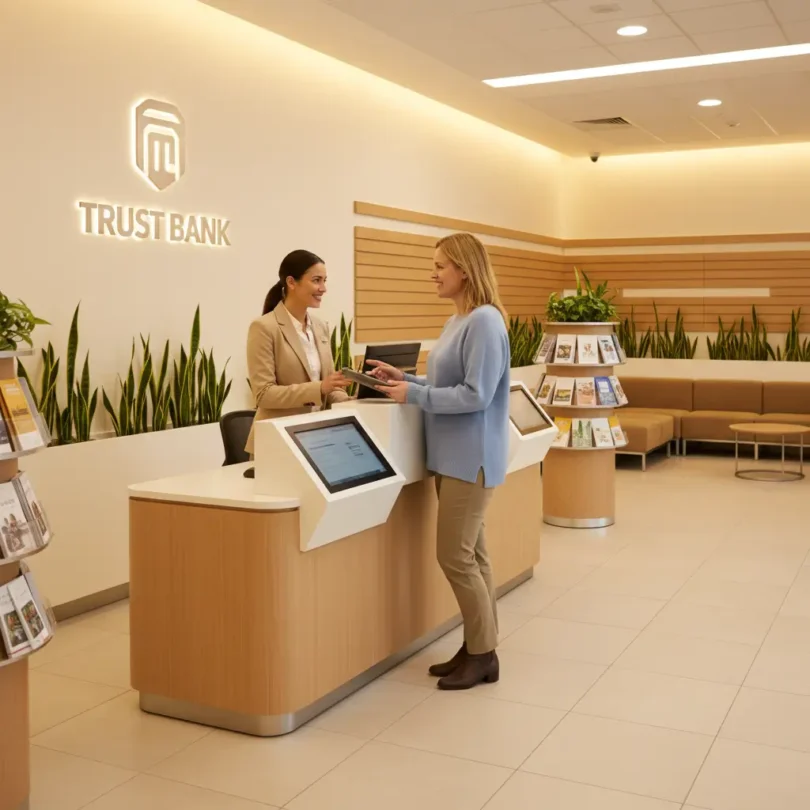
- Sit down with a banker and explain the type of account you want to open.
- Hand over your physical identification documents and proof of address for the banker to photocopy.
- Review the account agreements and sign the physical paperwork.
- Make your initial deposit using cash or a check.
- Leave the branch with your account details and, in some cases, a temporary debit card.
Managing Your New Account
Opening your account is just the beginning. Proper account management ensures your money remains secure and helps you avoid unnecessary charges.
Leverage mobile banking
Modern banks provide powerful mobile apps that put your finances at your fingertips. Download your bank’s official app to monitor your balances in real time, deposit checks using your smartphone camera, and transfer money between accounts. Many apps also feature budgeting tools that categorize your spending, helping you stay on top of your financial goals.
Prioritize account security
Protecting your hard-earned money is critical. Always use a strong, unique password for your online banking portal. Enable two-factor authentication (2FA) to add an extra layer of security. With 2FA, anyone attempting to log in will need both your password and a temporary code sent to your mobile device. Additionally, set up account alerts to notify you of any large withdrawals, low balances, or suspicious login attempts.
Avoid common bank fees
Bank fees can quickly eat away at your balance if you are not careful. Be proactive to keep your money in your pocket.
- Monthly maintenance fees: Many banks charge a fee simply for keeping the account open. You can often waive this fee by maintaining a minimum daily balance or setting up direct deposits from your employer.
- Overdraft fees: If you spend more money than you have in your account, the bank may cover the transaction but charge you a hefty overdraft fee. Prevent this by monitoring your balance closely or opting out of overdraft protection, which simply declines the transaction if funds are insufficient.
- ATM fees: Using an ATM outside of your bank’s specific network usually triggers a fee from both the ATM operator and your own bank. Always search for in-network ATMs using your bank’s mobile app to avoid these charges.
Frequently Asked Questions
Does opening a bank account affect my credit score?
Opening a standard checking or savings account generally does not impact your credit score. Banks typically use a service like ChexSystems to review your banking history, rather than running a hard inquiry on your credit report. However, if you apply for overdraft protection that functions as a line of credit, the bank might perform a hard pull, which can temporarily lower your score.
Can I open a bank account if I have bad credit?
Yes, you can still open a bank account with bad credit. Because banks look at your banking history rather than your credit score, past credit card debt will not necessarily disqualify you. If you have a history of unpaid bank fees or overdrafts, you might need to look for a “second chance” checking account, which is specifically designed for individuals rebuilding their financial history.
How old do you have to be to open a bank account?
You typically need to be 18 years old to open a bank account by yourself. If you are a minor, you can open a joint account with a parent or legal guardian. The adult serves as a co-owner of the account and assumes legal responsibility for it until you reach the age of majority.
Taking control of your financial health
Establishing a relationship with a financial institution empowers you to manage your money with confidence. By carefully selecting an account that aligns with your lifestyle, preparing the right documents, and utilizing modern digital tools, you set yourself up for long-term stability.
Take the time to compare options and read the fine print. Once your account is active, use your bank’s mobile app to monitor your spending and set up automatic transfers to your savings. Actively managing your new bank account will help you build a solid foundation for all your future financial goals.