

Managing your own money is a massive step toward financial independence. When you start earning a paycheck from a part-time job, saving up for a car, or planning for college expenses, stashing cash in a bedroom drawer quickly loses its appeal. You need a secure place to store your funds, a debit card for online purchases, and a way to track your spending.
Many high school students find themselves asking if they can open a bank account at 17. The short answer is yes. You absolutely can have your own bank account before turning 18. The process just looks a little different than it does for adults.
Because you are still legally considered a minor, banks have specific rules regarding how you can open and manage an account. Most financial institutions require a parent or legal guardian to be involved in the process. However, some banks have started offering unique pathways for older teens to take full control of their finances.
This guide will walk you through the exact legal requirements for opening an account as a minor. We will explore the differences between joint and independent accounts, outline the exact documents you need, and highlight the best banking options available for 17-year-olds right now.
The Legal Requirements for Opening a Bank Account as a Minor
Understanding the legal landscape helps explain why opening a bank account as a teenager involves a few extra steps. In the United States, the age of majority in most states is 18. This legal milestone means you are officially recognized as an adult who can enter into legally binding contracts.
When you open a bank account, you are signing a legal contract with the financial institution. You agree to their terms of service, fee structures, and overdraft policies. Because minors cannot be held legally liable for contracts in the same way adults can, banks take on a significant financial risk if they allow a minor to open an account entirely on their own.
To mitigate this risk, almost all major banks and credit unions require a minor to open a joint bank account with an adult. The adult co-owner, usually a parent or legal guardian, assumes legal responsibility for the account. If the account becomes overdrawn or incurs fees, the bank can hold the adult financially accountable.
While this rule applies broadly across the banking industry, specific state laws and individual bank policies can create slight variations. Some credit unions have special provisions for working teens, and a select few national banks offer specific student accounts with more lenient age restrictions.
Joint Accounts vs. Independent Accounts for Teens
When you set out to open a bank account at 17, you will encounter two primary account structures: joint accounts and independent accounts. Knowing the difference will help you and your parents choose the right financial product.
How Joint Bank Accounts Work
A joint bank account is the most common banking solution for teenagers. You and your parent or legal guardian own the account together. Both of you have equal access to the funds, meaning either person can deposit money, make withdrawals, and view transaction histories.
For a 17-year-old, a joint account offers a safety net. Parents can transfer money easily in emergencies. They can also utilize parental controls offered by many modern banks. For instance, parents might set spending limits, freeze a misplaced debit card, or receive text alerts for large transactions. Chase High School Checking and Capital One MONEY Teen Checking are excellent examples of joint accounts designed specifically with parental oversight in mind.
The primary downside for an older teen is a lack of total privacy. Your parents will be able to see exactly where and when you spend your money.
The Rare Independent Account for 17-Year-Olds
Finding an independent checking account as a minor is difficult, but it is not entirely impossible. A small number of banks recognize that 16- and 17-year-olds often have jobs and need independent financial tools.
Bank of America, for example, allows teens ages 16 and older to apply as the sole owner of a SafeBalance Banking account. Similarly, Citizens Bank allows 17-year-olds to open an individual checking account, provided they visit a physical branch location to complete the application.
An independent account gives you complete privacy and control. Your parents will not have access to your transaction history, nor will they be able to transfer funds directly from their accounts unless they use a third-party app. This setup is ideal for teens who are already financially responsible and want to manage their money entirely on their own terms.
Step-by-Step Guide: Documentation You Need to Bring
Showing up at the bank unprepared is a frustrating experience. Financial institutions are required by federal law to verify the identity of every person opening an account. This means both you and your parent will need to provide specific documentation.
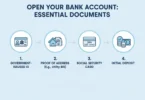
Gather these documents before you start an online application or walk into a branch:
Identification for the Teen
Banks usually require two forms of identification for the minor. You should prepare to present:
- A government-issued photo ID. A driver’s license, state ID card, or passport works best.
- A secondary form of ID. This could be your birth certificate or a valid student ID card from your high school.
Identification for the Parent
The adult co-owner must also verify their identity. They should bring:
- A primary government-issued photo ID, such as a driver’s license or passport.
- A secondary ID, like a debit or credit card from another major financial institution.
Social Security Numbers
Both the teen and the parent will need to provide their Social Security Numbers (SSN) or Individual Taxpayer Identification Numbers (ITIN). You rarely need the physical card, but you must know the exact number.
Proof of Address
Banks need to verify where you live. Your parent can provide a recent utility bill, a lease agreement, or a mortgage statement that displays their name and current residential address.
The Best Types of Accounts for Young Adults
Not all bank accounts serve the same purpose. As a 17-year-old, you want to choose an account type that aligns with your specific financial goals.
Teen Checking Accounts
A checking account is designed for everyday spending. You get a debit card to buy gas, pay for subscriptions, and shop online. The best teen checking accounts waive monthly maintenance fees and do not require a high minimum balance.
For example, the Capital One MONEY Teen Checking account requires no minimum opening deposit, charges no monthly fees, and even earns a small amount of interest. Chase High School Checking is another strong option, offering access to thousands of branches and ATMs, though the parent must have an existing Chase account.
Savings Accounts
If your goal is to set aside money for college or a future vehicle, you need a savings account. These accounts restrict how often you can withdraw money, encouraging you to leave the funds alone. They also pay you interest on your deposits. Many banks allow you to link a checking and savings account, making it easy to transfer a portion of your paycheck into savings automatically.
Student Accounts
As you approach 18 and potentially head off to college, student accounts become highly relevant. These are traditional adult checking accounts that waive monthly maintenance fees for students between the ages of 17 and 24. They offer a smooth transition into full adult banking without the burden of expensive service charges.
Crucial Features to Look For in a Teen Bank Account
When comparing different banks, look closely at the fine print. The ideal bank account for a 17-year-old should be low-cost and highly accessible. Focus on these specific features:
No Monthly Maintenance Fees
You should never pay a bank just to hold your money. The best accounts for minors, like the Alliant Teen Checking or Bank of America SafeBalance account, do not charge monthly service fees.
Forgiving Overdraft Policies
Mistakes happen when you are learning to manage money. An overdraft occurs when you spend more money than you have in your account. Historically, banks charged massive fees for this. Today, the best teen accounts prevent this entirely. Accounts like Capital One MONEY and Bank of America SafeBalance will simply decline a transaction if you do not have sufficient funds, rather than charging you a $35 penalty.
Strong Mobile Banking Apps
You likely manage your entire life from your smartphone. Your bank should be no different. Look for a bank with a highly rated mobile app that allows you to deposit checks by taking a picture, check your balance instantly, and send money to friends via services like Zelle.
ATM Access and Fee Reimbursements
Access to cash is important. Check the bank’s ATM network to ensure they have machines conveniently located near your home, school, or workplace. Some online-only banks, like Axos Bank First Checking, even offer reimbursements if you are forced to use an out-of-network ATM and get charged a fee.
Managing Your First Account: Tips for Success
Opening the account is only the first step. Building strong financial habits at 17 will set you up for a lifetime of success.
Track your balance regularly. Make a habit of logging into your mobile app every few days. Knowing exactly how much money you have prevents accidental overspending and helps you spot any unauthorized charges quickly.
Create a simple budget. Decide how you want to allocate your income before you spend it. A common strategy is the 50/30/20 rule: dedicate 50% of your income to needs, 30% to wants, and 20% to savings.
Automate your savings. If your bank app allows it, set up an automatic transfer. Every time your paycheck hits your checking account, automatically move a set amount—even just $10 or $20—into your savings account. You will be surprised by how quickly it adds up.
Frequently Asked Questions About Banking Before 18
Can I open a bank account online at 17?
Yes, many banks allow you to open a teen checking account online. However, your parent or guardian will usually need to complete the online application with you to verify their identity and sign the joint account agreements.
What happens to my teen account when I turn 18?
Most teen accounts are designed to convert automatically into standard adult checking accounts when you reach your 18th or 19th birthday. For instance, the Capital One MONEY account transitions to a standard 360 Checking account. At that point, your parents can be removed from the account, granting you sole ownership.
Can I get a credit card at 17?
No, you cannot open your own credit card account at 17. The Credit CARD Act of 2009 strictly prohibits credit card companies from issuing cards to anyone under 18. However, your parents can add you as an authorized user to one of their existing credit cards to help you start building credit history.
Will my parents see what I buy?
If you have a joint account, yes. Your parent is a co-owner of the account and has full access to the monthly statements and the digital transaction history. If you manage to open an independent account at a bank that allows 17-year-olds to do so, your purchases remain private.
Final Checklist for Visiting the Bank
Getting your own bank account at 17 is a straightforward process when you arrive prepared. Whether you are filling out an application on a laptop at home or sitting across a desk from a banker at a local branch, having your documents organized ensures a smooth experience.
Use this final checklist before you apply:
- Coordinate a time with your parent or guardian to apply together.
- Gather your unexpired government-issued photo ID and secondary ID.
- Ensure your parent has their ID and proof of address ready.
- Memorize or bring your Social Security Number.
- Bring a small amount of cash or a check to cover the minimum opening deposit, if the bank requires one.
Taking control of your finances early gives you a massive advantage. By choosing the right account and practicing good money management skills now, you will be entirely prepared to handle your financial life as an independent adult.