

Going to a physical bank branch used to take a big bite out of your day. You had to drive across town, find parking, stand in a long line, and sit across a desk while a banker processed stacks of paperwork. Managing your finances required adjusting your schedule to fit traditional banking hours.
The financial landscape looks very different now. A massive shift toward digital-first banking has made financial services highly accessible. Banks have heavily invested in their digital infrastructure. This allows customers to handle almost everything from their smartphones or laptops.
People frequently ask, “can I open a bank account online?” The answer is an absolute yes. Most financial institutions allow you to complete the entire process from the comfort of your home. You no longer have to wait for a branch to open to start building your savings or setting up a checking account.
Reading through this guide will give you a clear roadmap of the digital onboarding process. You will learn exactly what documents you need, how to choose the right account, and what security measures protect your money.
Benefits of Opening a Bank Account Online
Choosing to open an account digitally offers several major advantages over visiting a local branch. These perks extend far beyond the initial signup process.
Unmatched Convenience
Digital applications are available 24 hours a day, seven days a week. You can apply for a new checking or savings account on a Sunday evening or during your lunch break on a Tuesday. There is no need to schedule an appointment or wait for the next available representative.
Better Interest Rates
Online-only banks do not have to pay for physical storefronts, landscaping, or large teams of branch employees. They pass these significant savings on to their customers. You will frequently find that digital banks offer much higher annual percentage yields (APYs) on savings accounts compared to traditional brick-and-mortar institutions. Earning a higher interest rate helps your money grow faster over time.
Fewer Fees
Because of their lower overhead costs, online financial institutions tend to charge fewer fees. Many digital accounts have no monthly maintenance fees. They also frequently eliminate minimum balance requirements. This allows you to keep more of your hard-earned money in your pocket.
Streamlined User Experience
Banks design their online applications to be fast and intuitive. A modern bank application takes just a few minutes to complete. The interfaces are clean and guide you through each requirement step by step.
Essential Documentation Needed
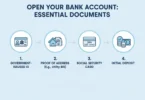
Federal laws require financial institutions to verify the identity of anyone opening a new account. This prevents fraud and money laundering. Gathering your documents before you start the application will make the process incredibly smooth.
You will need a valid, unexpired government-issued ID. A standard driver’s license works perfectly for this. You can also use a state ID card or a valid passport.
The bank will ask for your Social Security Number (SSN). If you do not have an SSN, some banks accept an Individual Taxpayer Identification Number (ITIN). Non-citizens might need to provide a passport from their home country or an alien identification card.
You must provide proof of your physical address. A post office box is usually not sufficient for opening a new account. The bank wants to know where you actually live. If your current address does not match the one on your ID, you should have a recent utility bill, lease agreement, or official piece of mail ready to verify your residence.
Finally, you need a way to fund your new account. Have the routing and account numbers for your existing bank account handy. Alternatively, some banks allow you to make your initial deposit using a debit card.
Step-by-Step Guide to the Online Application Process
Starting a new banking relationship is highly straightforward. Follow these precise steps to get your account up and running.
Step 1: Choose Your Bank
Research different financial institutions to find the best fit for your needs. Look closely at their fee structures, interest rates, and customer reviews. You might choose an online-only bank to maximize your savings rate. You might prefer a traditional bank with a strong digital platform so you can still deposit physical cash occasionally.
Step 2: Fill Out the Application
Navigate to the bank’s official website or download their mobile app. Look for a button that says “Open an Account” or “Get Started.” The application will ask for your basic personal details. You will type in your full legal name, date of birth, physical address, and contact information.
Step 3: Verify Your Identity
The bank will run a quick background check using the personal details you provided. Many applications will ask you to upload a clear photo of your government-issued ID. Some apps might even ask you to take a quick selfie to ensure your face matches the picture on your ID card.
Step 4: Read the Disclosures
You will encounter several pages of terms and conditions. These documents explain the bank’s fee schedule, overdraft policies, and privacy rules. Read through these carefully so you understand the rules governing your money. You will then click a box to provide your electronic signature.
Step 5: Fund Your New Account
Once the bank approves your application, you must make an initial deposit. You can link an external bank account to transfer funds electronically. The initial transfer might take a few business days to fully clear.
Comparing Different Account Types
Financial institutions offer various products designed for specific financial goals. Knowing the differences helps you pick the right tool for your money.
Checking Accounts
A checking account is designed for everyday spending. You use this account to pay bills, buy groceries, and receive your paycheck. These accounts come with a debit card and give you easy access to cash through ATMs. Checking accounts typically earn very little to no interest.
Traditional Savings Accounts
Savings accounts provide a secure place to store money you do not need immediately. They earn a modest amount of interest. These accounts are great for building an emergency fund or saving up for a vacation.
High-Yield Savings Accounts
Online banks primarily offer high-yield savings accounts. These operate exactly like traditional savings accounts but pay a significantly higher interest rate. Moving your emergency fund into a high-yield account is a smart way to combat inflation.
Money Market Accounts
A money market account blends the features of a checking and a savings account. You usually earn a competitive interest rate. You also gain the ability to write a limited number of checks or use a debit card. These accounts often require a higher minimum balance to avoid fees.
Certificates of Deposit (CDs)
A CD requires you to lock your money away for a specific period, such as six months or five years. In exchange for your commitment, the bank pays a fixed interest rate. You will face a penalty if you withdraw your money before the term expires.
Security Considerations and Digital Safety Protocols
People naturally worry about the safety of sending sensitive personal data over the internet. Reputable banks employ massive security protocols to keep your information and your money safe.
Always verify that the bank is federally insured before you apply. Look for the Federal Deposit Insurance Corporation (FDIC) logo on the bank’s website. If you are joining a credit union, look for the National Credit Union Administration (NCUA) logo. This insurance guarantees that your money is protected up to $250,000 per depositor if the institution fails.
Legitimate banking websites use strong encryption to scramble your data. You can verify this by looking at the website address in your browser. The address should start with “https” rather than just “http.” You should also see a small padlock icon next to the URL.
Banks also utilize multi-factor authentication (MFA). This means you need more than just a password to access your account. The bank might text a unique code to your phone or require fingerprint recognition to verify your identity upon login.
Troubleshooting Common Digital Onboarding Issues
Technology is remarkably efficient, but glitches still happen. Here are a few common roadblocks you might encounter and how to get past them.
Identity Verification Fails
Sometimes the automated system cannot read the photo of your ID. Ensure you take the picture in a well-lit room. Avoid glaring reflections on the plastic card. Place the ID on a dark, solid background to create sharp contrast. If the system still rejects your photos, you may need to call customer service to verify your identity manually.
ChexSystems Rejections
Banks use a reporting agency called ChexSystems to review your banking history. If you have a history of unpaid overdraft fees or closed accounts at other institutions, your application might be denied. You have the right to request a free copy of your ChexSystems report to see what negative marks exist. If you have a poor banking history, look for institutions offering “second chance” checking accounts.
Funding Delays
Transferring money from an external bank can sometimes hit a snag. Double-check your routing and account numbers for typos. Ensure the name on your external account exactly matches the name on your new application.
Age Restrictions
Minors cannot open a bank account online by themselves. A parent or legal guardian must co-sign the application to create a joint account.
Frequently Asked Questions
Can I open a checking account online instantly?
Yes, the application process usually takes less than ten minutes. If the bank can verify your identity electronically, your account is opened instantly. You will receive your account number right away, though waiting for a physical debit card to arrive in the mail takes about a week.
Can I open a bank account online with no deposit?
Many modern banks allow you to open an account with a zero balance. However, you generally need to deposit funds within a specific window, such as 30 to 60 days. If the account remains completely empty past that deadline, the bank will automatically close it.
Do I ever have to visit a physical branch?
If you choose an online-only bank, you will never visit a branch because none exist. You manage all deposits, transfers, and customer service needs digitally. If you use a traditional bank, you can open the account online and still visit a branch later if you have a complex issue or need a cashier’s check.
Can I open a joint account online?
Yes, you can easily open an account with a spouse or partner. The application will ask you to select “joint account” at the beginning of the process. You will then need to enter the personal details and upload the identification documents for both applicants.
Final Tips for Managing Your New Financial Presence
Completing the online application is just the first step in your digital banking journey. Once your account is active, you should immediately download the bank’s mobile application to your smartphone. The mobile app gives you complete control over your money from anywhere in the world.
Take a few minutes to set up account alerts. You can configure the app to send a push notification or an email every time a transaction occurs. Setting up a low-balance alert helps you avoid accidental overdraft fees.
You should also provide your new routing and account numbers to your employer. Setting up direct deposit ensures your paycheck hits your account as quickly as possible. Many banks even offer early direct deposit features, giving you access to your wages up to two days faster than a traditional paper check.
Embracing digital banking gives you powerful tools to track your spending and hit your savings goals. Managing your finances effectively becomes much simpler when your bank lives right in your pocket.